
Proof of Life
July 18, 2026
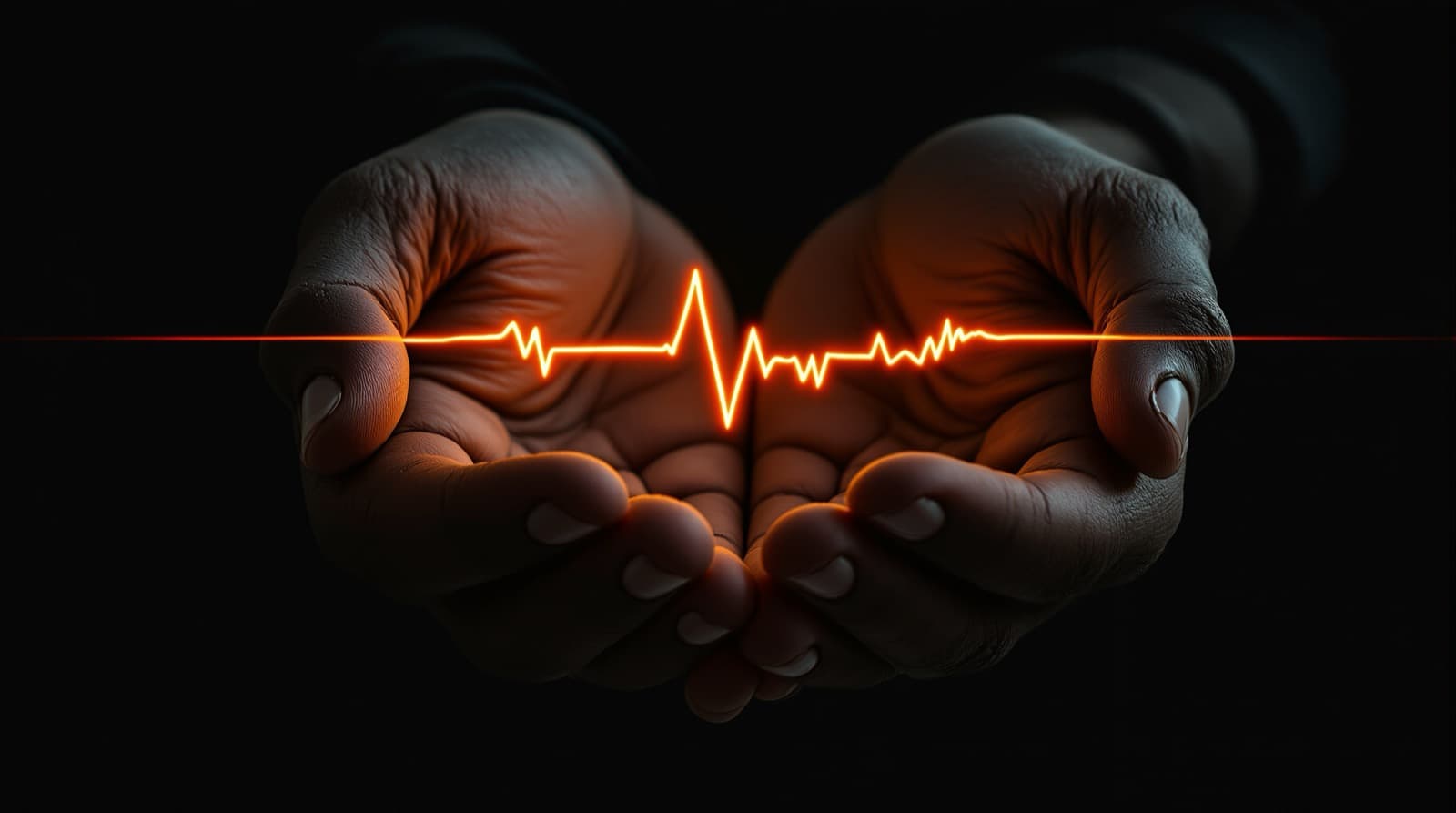
Salvation is an inward miracle of the heart. But a faith that never executes is just unrun code. Here is how saving faith works itself out in real time.
Romans 10:10 & James 2:18, 26 — For it is with your heart that you believe and are justified, and it is with your mouth that you profess your faith and are saved… “Show me your faith without deeds, and I will show you my faith by my deeds… As the body without the spirit is dead, so faith without deeds is dead.”
Let us establish a non-negotiable, foundational truth right up front: with the heart, one believes to the salvation of the soul. As Paul declares in Romans 10:10, you are not justified because your brain intellectually agrees with a set of historical facts. You are justified because your heart—the deepest seat of your will, your desires, and your total being—has surrendered to Jesus Christ as Lord. Salvation is an inward miracle of the heart.
But once that miracle happens inside, how does it work itself out? How do you—and a watching world—know that heart belief is actually running within you? That is where James steps in with a surgical warning: a faith that does not change how you live is a faith that cannot save your soul. Genuine heart belief is never static; from the exact moment it triggers inside, it begins to operate. Here is how saving faith works out in real time:
1. Head Knowledge is Just Unexecuted Code
In computer programming, you can write the cleanest, most elegant function on a screen. You can memorize the syntax, understand the logic, and know exactly what the algorithm is supposed to do. But until that code is actually called into execution (run), it sits passively in memory. It consumes no power, performs zero operations, and produces zero output.
That is the exact danger of mental assent—having all the right theological syntax stored in your head while your heart remains untouched. James warns that even the demons possess orthodox data; they intellectually know God is real, but that knowledge produces terror, not surrender. Biblical faith requires a system transition: truth must drop from the passive RAM of your intellect and be executed as a living, breathing surrender in your heart.
2. The First Runtime Output is Confession
When the function of heart belief is finally executed, what is the very first line of output? Notice how Paul completes the thought in Romans 10:10: “and it is with your mouth that you profess your faith and are saved.” Confession is the simplest, most immediate physical application of heart belief.
There is no greater illustration of this than the thief on the cross. The Gospels tell us that initially, both thieves reviled and mocked Jesus (Matthew 27:44). Yet hanging in agony, something shifted in one of their hearts—perhaps triggered by hearing the Master pray, “Father, forgive them, for they do not know what they are doing.” Heart belief executed in that dying man.
Think about his condition: his hands and feet were literally nailed to wood. He had zero physical capacity to perform good works, feed the poor, or walk down to be baptized. But the moment faith executed in his heart, it immediately produced its first runtime output: he opened his mouth. He rebuked his companion, confessed Christ’s innocence, and cried out, “Jesus, remember me when you come into your kingdom!” And that verbal confession of a surrendered heart was enough for Jesus to declare: “Today you will be with me in paradise.”
3. The Ongoing Function is Sacrificial Love
The thief on the cross proves that when your hands are pinned, God honors the raw confession of a believing heart. But for those of us whose hands and feet are not nailed to a cross, saving faith cannot stop at our lips! When a program continues to run, it must produce sustained output. Paul defines this ongoing runtime result in Galatians 5:6: “In Christ Jesus neither circumcision nor uncircumcision has any value. The only thing that counts is faith expressing itself through love.”
The Greek word Paul uses for “expressing itself” is energeomai—an energetic, operational force. When faith is actively executing in the heart, its natural function is to output the result of practical, sacrificial love.
James illustrates a broken, stalled function with a chilling everyday scenario: seeing a brother or sister starving and freezing, yet offering only verbal confession without physical action: “Go in peace; keep warm and well fed.” Sentiment without sacrifice is spiritual hypocrisy. To speak holy words of comfort while willfully withholding the practical power to help is an insult to the Gospel. True faith does not stop at the vocal cords; it moves to the hands and feet to meet the need.
4. Hearing Must Turn Into Executing
Jesus Himself drew this exact line between passive listening and active execution in Matthew 7:24–26. He compared two builders who both had the exact same information—they both heard the exact same sermon from His mouth. The catastrophic difference between the house that stood against the storm and the house that collapsed in the flood was not what they knew; it was whether they executed the command.
The foolish builder had head knowledge without obedience. The wise builder took the truth into his heart, confessed it with his life, and worked it out into his foundation. Hearing the word is just the input; doing the word is the proof that the truth has taken root in your soul.
5. Action is the Pulse, Not the Purchase
Let us be crystal clear: we do not buy our salvation with good works. Like the thief on the cross, we are saved by grace through heart faith alone! But as Martin Luther famously noted, we are saved by faith alone, but the faith that saves is never alone. James compares faith without action to a human body without a breath or a heartbeat—a corpse.
From Abraham laying his future on the altar to Rahab risking her life to hide enemy spies, scripture shows us that action is the pulse of genuine belief. Our obedience and our good deeds do not purchase our forgiveness; they are the visible, beating pulse proving that the resurrection life of Jesus is actually running inside us.
What would a watching world conclude about your faith if they could only judge it by your calendar, your bank account, and the way you treat the broken people around you? Stop settling for unexecuted theology. Take your faith out of the realm of mental theory and step into courageous obedience. Let the belief of your heart begin with the confession of your lips, and let it finish in the labor of your hands. Do not just tell the world what you know—show them the proof of life.